
Bowel Obstruction Symptoms and Treatment
Small bowel obstruction (SBO) is often caused by adhesions that occur in the small intestines (small bowel). Adhesions are structures that form to help the body heal. They are composed of strong, microscopic collagen fibers (called cross-links) that bind together to create curtains, ropes, or blankets of tissue to surround and contain injured areas of the body. They form naturally as the first step in the healing process, whenever the body recovers from tissue damage. Adhesions form after surgery, infection, inflammation, trauma, radiation therapy, and as a result of chronic poor posture.
Left: Adhesions can form inside the bowel
Top Right: Bowel can be pinched shut by adhesion formation outside the bowel
Bottom Right: Bowel can become kinked by adhesions much like a garden hose
Surgery is a major cause of adhesions. Post-surgical adhesions are the leading cause of blockage in the small intestines; they cause 60% of all small bowel obstructions. In fact, small bowel obstruction is quite prevalent and accounts for 20% of all acute surgical admissions in the U.S.1 Many patients with small bowel obstruction often find their symptoms return after bowel obstruction surgery, perpetuating the cycle of adhesions, surgery, adhesions.
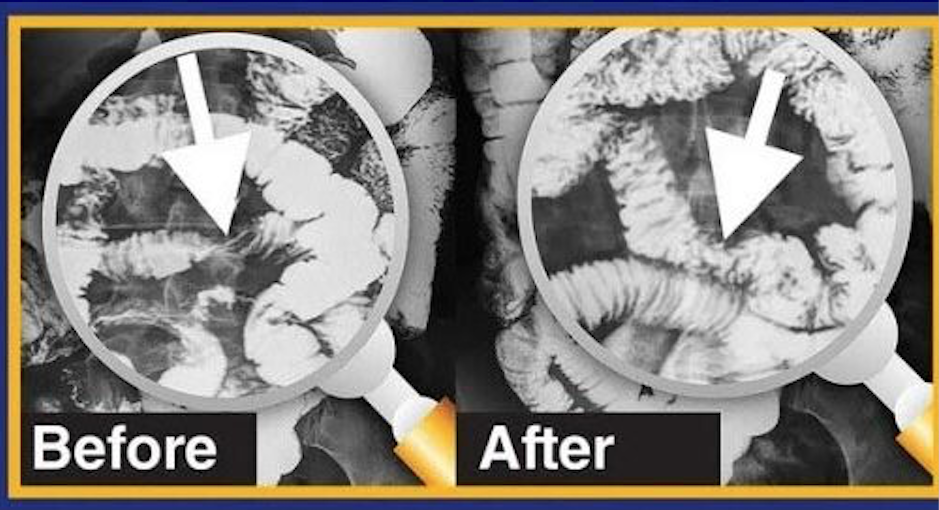
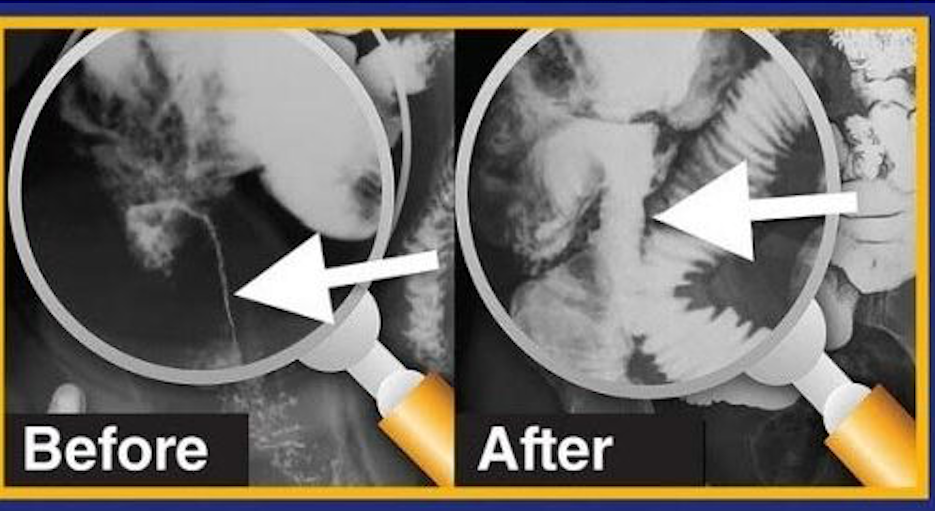
Clear Passage Physical TherapySM has successfully treated numerous patients with small bowel obstructions and helped diminish their need for additional surgery. We have treated patients who have undergone multiple bowel surgeries (as many as nine) before coming to us for treatment. We have treated patients who were in pain and on liquid diets when arriving at our clinic for treatment.
One patient anxiously told us about her bowel obstruction symptoms: “It’s hard to explain the pain unless you have had it. You get a lot of abdominal swelling, and localized pain in certain spots. The swelling gets really bad and your clothes don’t fit. At night, your body throbs. It just gets to the point where it never goes away and the pain overrides your thoughts. You can’t even walk properly because you are in so much pain and you feel your body drawing up.” Other patients have reported different bowel obstruction symptoms, including vomiting after eating and even fainting.
Our therapists have been using manual techniques to break-apart adhesions within the body for over 20 years. Using just their hands, our therapists locate areas of tension, restriction, and adhesion formation They slowly deform and detach adhesions, and help return patients to healthy active lifestyles.
If you are unable to have a bowel movement and notice symptoms of small bowel obstruction, see your doctor as soon as possible. A small bowel obstruction can quickly become life threatening. If the bowel closes completely, emergency surgery may be required.
Video: A patient shares her story of overcoming post surgical adhesions and bowel obstructions with the Wurn Technique. "It gave me my life back."
Small bowel obstruction symptoms to watch for include:
- Vomiting (particularly green or brown colored)
- Constipation (inability to eliminate)
- Diarrhea
- Abdominal bloating, fullness, gas
- Abdominal pain and cramping around the belly button
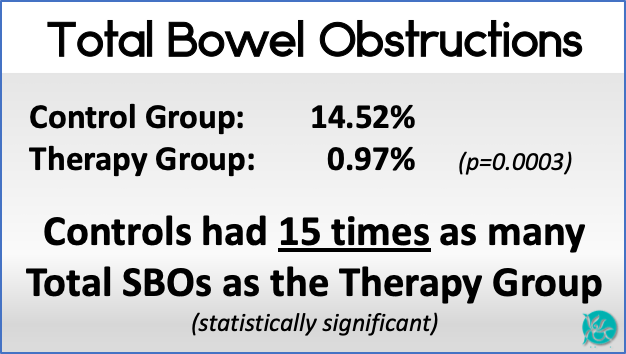
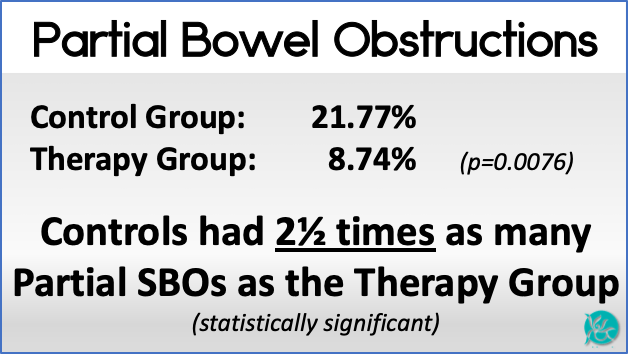
We treat men, women, and some children for abdominal adhesions and partial or recurring bowel obstructions. Our manual physical therapy protocol, The Wurn Technique®, has been shown in peer-reviewed medical journals to reduce adhesions, decrease pain, and improve soft tissue mobility without the risks of surgery or drugs. Published studies and citations have shown it opened adhered structures as tiny as fallopian tubes, which are smaller and generally less accessible than the small bowel. Clinically, we are seeing very good success helping decrease or eliminate the adhesions that obstruct the intestines, and breaking the cycle of surgery-adhesions-surgery for our patients. The Wurn Technique® is practiced exclusively at Clear Passage Physical Therapy® clinics.
1 Nobie, B. Obstruction, Small Bowel. EMedicine from WebMD. Updated Nov. 12, 2009. Retrieved from http://emedicine.medscape.com/article/774140-overview.
Doctors comment on the Wurn Technique®
and the book Miracle Moms, Better Sex, Less Pain
"As a surgeon, I know that most patients are going to develop some form of adhesive disease after surgery. In the past, treatment for adhesions has been more surgery - which caused more adhesions. Now with the amazing Wurn Technique®, patients have a safe and effective alternative to surgery."
Dr. Jacques Moritz, Director of Endoscopy and Gynecology
St. Luke's-Roosevelt Hospital, New York
Columbia University College of Physicians and Surgeons
"You have perfected a technique to treat adhesions, with years of experience, scientific 'backup' and case studies to prove it."
Dr. Leslie Mendoza Temple, Medical Director, Integrative Medicine
Faculty: Northwestern University, Feinberg School of Medicine