

352.336.1433
Home Adhesions Womens Health
Select your text size for this site here:Normal TextMedium TextLarge Text

How Do Adhesions Affect a Women's Health

Because of its unique location, complexity and vulnerability, the female pelvis is a frequent site of adhesions, thus of recurring pain or dysfunction. Pelvic pain is often caused by adhesions – tiny glue-like bonds that form to help the body heal from lifetime events such as surgery, infection, trauma, or endometriosis. Since adhesions do not generally appear on diagnostic tests, they can cause significant frustration, as well as pain or dysfunction. Laparoscopic surgery may help a physician view or remove some adhesions, but adhesions that form due to the diagnostic surgery can cause the pain to return – sometimes worse than before. Clear Passage Physical Therapy® has over two decades of experience and success evaluating and treating adhesions, pain, and dysfunction in the female body, without surgery or drugs.

More Information on Treating Adhesions

Pelvic and abdominal adhesions

Adhesions can form after any major surgery, trauma or infection.

Adhesions can form after any major surgery, trauma or infection.

A woman's pelvis and reproductive tract are subjected to numerous stresses and traumas throughout life. Surgery, endometriosis, infection, and abuse are primary causes of adhesion formation. Falls onto the back, hip, and tailbone can cause tiny adhesions to form in the muscles and organs of the pelvis, gluing delicate structures, and decreasing fertility.

When tissues become injured, infected, or inflamed, tiny but powerful collagen cross-links form as the first step in the healing process. Like the tiny strands of a nylon rope, these fibers are the building-blocks of adhesions which form in injured areas. Adhesions can bind together organs, nerves, muscles, and neighboring structures in a strong, glue-like strait-jacket, with a strength approaching 2,000 pounds per square inch. After the body heals, these internal strait-jackets become part of the body, gluing structures together. When this happens, they can cause pain or dysfunction, including difficulties with digestion, menstruation, sexual function, or fertility.

What causes adhesions?

Adhesions form from surgery, infection, inflammation, trauma, radiation therapy, and chronic poor posture. Common causes of adhesions include:

  • Abdominal or pelvic surgery
  • Abortion, Miscarriage or D&C
  • Pelvic inflammation (vaginitis, cystitis, colitis, etc.)
  • Abdominal inflammation (appendicitis, gastritis, etc.)
  • Bladder or vaginal infections
  • Endometriosis
  • Pelvic inflammatory disease (PID)
  • Sexually transmitted diseases
  • Intrauterine Device (IUD)
  • Physical trauma (e.g. vehicle accident)
  • Chronic poor posture (often developed to compensate for an injury)
  • Back, hip or tailbone injury (e.g., a fall)
  • Radiation therapy
  • Physical or sexual abuse

  • Surgery is a major cause of adhesions. A review of surgical literature over several decades reported that over 90% of patients developed adhesions after abdominal surgery and 55% to 100% of women developed adhesions after pelvic surgery.1 Even modern, minimally invasive surgeries can cause problems. The Geneva Foundation for Medical Education and Research reports that “adhesion formation and reformation are an unavoidable event in reproductive pelvic surgery in spite of the variable skills in microsurgery, endoscopic or laser surgery.”2

    C-Section causes adhesions

    C-Section surgery can assist childbirth, but may cause adhesions, as the body heals from the surgery.

    Caesarian (C-section) is the most common surgery among women in the United States. The surgeon cuts through several layers of pelvic tissues, then cuts the uterus open. The surgeon then removes the newborn, and re-stitches the various cut layers. C-section is seldom a matter of choice for the mother. Complications such as a breech baby or a vaginal birth that is not progressing are cited as reasons for a C-section.

    Following C-section, tiny strands of collagen rush to the site that has been cut. There, they form powerful adhesive bonds. The adhesions that form in the pelvis after this open surgery remain in the body for life, as a permanent by-product of the procedure.

    Surgery is a significant cause of adhesions, pelvic pain, digestive problems and secondary infertility in our patients. According to a study in Birth (2008), nearly 20% of women who underwent C-section surgery reported pain at the incision six months postpartum.3 An earlier study found that women who underwent C-sections were more likely to experience bowel problems than women with vaginal deliveries.4

    Hysterectomy generally accesses the uterus in the same way as the C-section noted above. Instead of slicing through the uterine wall, the surgeon will cut the uterine attachments and remove the entire organ (sometimes leaving the ovaries.) Some women opt for a vaginal hysterectomy, because it leaves no visible scar. While this surgery generally goes well, it can leave internal scars that cause recurring pain or dysfunction, even long after the procedure. A study on the impact of open gynecological operations found that 35% of all open abdominal or pelvic surgery patients were readmitted to the hospital an average of two times during the 10 years after their original surgery “for a problem potentially related to adhesions or for further intra-abdominal surgery that could be complicated by adhesions.”5 

    Episiotomy refers to the physician cutting the back of the vagina to ease childbirth. While many women undergo episiotomy with no ill effects, some complain of intercourse or pelvic pain, sexual dysfunction, or problems with elimination after an episiotomy. We find post-surgical adhesions to be a major contributor to these problems.

    Mastectomy is a life saving treatment for many women diagnosed with breast cancer. Yet, like other surgeries, it can leave painful adhesions and scarring. Women who have undergone a mastectomy may experience a variety of post-mastectomy symptoms syndromes. Pain may occur at the surgical scar, throughout the chest wall, and into the shoulders and arms. Mild to severe tightness can occur at the surgical site, and throughout the chest cavity and neighboring structures as adhesive strait-jackets envelop the area, after this surgery. While some pain is due to cut nerves, we find adhesion formation to be a major cause of pain and tightness after mastectomy.

    Physical and sexual abuse can create emotional and physical scarring. Sound counseling can help people come to grips with the conflicting emotions so often associated with abuse, but many victims also experience physical pain or dysfunction, long after the abuse. Palpable physical scars can exist in the body’s tissues for decades after abuse has ended. They can last a lifetime, if left untreated. Several of our clinics are well-versed in treating the physical scars associated with abuse. Please call for more information.

    Genital mutilation (or female circumcision) is practiced in various countries and tribal regions. The procedure involves partial or total excision of the external female genitals. It is usually performed during adolescence, but may occur as early as infancy. Because the procedure is usually performed in a non-sterile environment without anesthesia, it can cause massive adhesions due to infection, and healing from the traumatic ‘surgery.’ After this procedure, many women experience a lifetime of chronic pain, dysfunction or infertility.

    Early surgery: We have helped many adults and teens who had major surgery in their infancy or early youth. Children who undergo surgery at a young age tend to grow around their scars. These often remain as tightly bound areas, while the rest of the body grows. Some girls undergo reconstructive genital surgery as infants, to reverse visual abnormalities. While cases like this can be complex, we have witnessed wonderful results when we treat early surgical scars with our non-surgical therapy.

    Endometriosis and adhesions can cause infertility and pain

    Endometriosis (left) and adhesions (right)
    are two of the conditions addressed by
    the Wurn Technique®, a manual physical therapy which has been shown to reduce adhesions, decrease pain, and improve reproductive function without surgery of drugs.

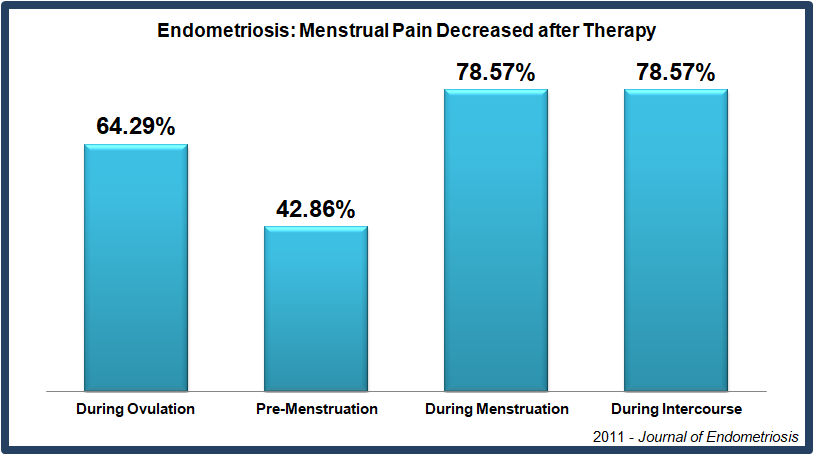
    Endometriosis Unfortunately, endometriosis and adhesions have become intimately related over the years. In many cases, surgery has been successful in decreasing endometriosis pain. We feel that part of the mechanism of that pain reduction is that surgery breaks or detaches the adhesive bonds that form after endometrial inflammation. However, when the body heals from the surgery, adhesions may form anew in the wake of that healing process.

    The Wurn Technique® has shown good results decreasing endometriosis pain and increasing fertility in women with endometriosis. Our focus on detaching the cross-links and reducing the adhesions associated with endometriosis has returned pain-free function and fertility for many women.

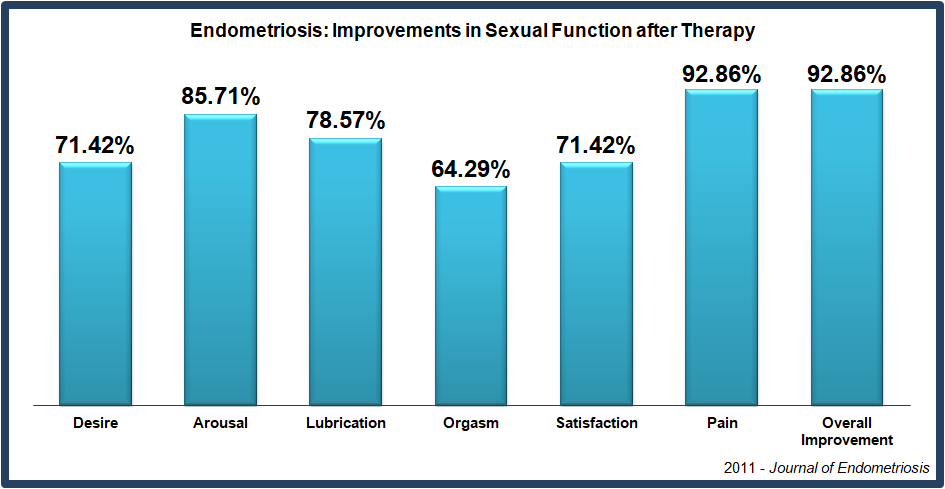
    Female sexual dysfunction and painful intercourse:Intercourse pain affects between 46% and 60% of all US women, according to reports in American Family Physician (2001)6 and Obstetrics & Gynecology (1996).7 Female sexual dysfunction can occur during any stage of intercourse.

    Sexual intimacy and intercourse should provide some of life's greatest pleasures. But because the female urogenital and reproductive organs are very susceptible to adhesions, intercourse can become a time of pain, dissatisfaction, and embarrassment for many women.

    We are world leaders in developing an effective, non-surgical, and drug-free therapy to treat intercourse pain and female sexual dysfunction. We have published several studies and citations in medical journals, and have addressed large physician groups on our work in this area.

    Female Infertility: Adhesions are a leading cause of female infertility and the primary cause of blocked fallopian tubes. It is an unfortunate fact that once adhesions form, they generally remain in the body for a lifetime. Adhesions may occur in pain-sensitive structures, or they may glue down reproductive structures without causing discomfort. Thus, any woman who has experienced any of the above listed causes of adhesions, may have adhesion-related infertility, whether or not she experiences pain.

    Our non-surgical infertility treatment, the Wurn Technique®, addresses the adhesions that cause poor reproductive function and nearly half of all female infertility. Recently, we have also seen success in treating women diagnosed with hormone related infertility (high FSH, POF).

    consultation

    Summary and treatment of adhesions

    As adhesions repair surgical incisions or rush in to repair areas affected by infection, inflammation, or other trauma, they may also attach tissues to neighboring structures. This can result in an uncomfortable pulling sensation or pain that begins in the weeks or months after the original trauma or surgery. Adhesion pain never seems to improve; it generally remains the same or worsens.

    The Wurn Technique treats infertility - naturallySurgical treatment of adhesions – lysis Until recently, surgical lysis (destruction of adhesions) was the only choice medical science offered to treat abdominal or pelvic adhesions. Lysis involves cutting or burning internal adhesions under general anesthesia. While lysis can be effective, abdominal and pelvic surgery have some major drawbacks, such as:

    • risks from anesthesia and infection,
    • risk of damage from cutting/burning neighboring structures in the tightly packed anatomy
    • the body generally creates more adhesions after surgery.

    The Wurn Technique® has been shown in peer-reviewed medical journals to reduce adhesions, decrease pain, increase function, and improve fertility without the risks of surgery or drugs. Our work is designed to reduce or eliminate adhesions, cross-link by cross-link. This mechanical process appears to be effective, even when the cross-links formed years, or decades earlier. Moreover, it doesn’t matter whether the adhesions are attaching muscle, bone, or organs. They may adhere areas as large as the bones of the low back and pelvis, as small as the fallopian tubes, as deep as the pituitary gland, or as delicate as the vaginal walls. Wherever they appear, we have witnessed excellent outcomes by treating the affected areas. Part of our success is due to decades of palpatory skills, and part is our in-depth study of each patient’s history. Another part is the fact that we listen deeply to each patient to fully understand her goals, and to help her achieve success.


    1. Liakakos T, Thomakos N, Fine PM, Dervenis C, Young RL. Peritoneal Adhesions: Etiology, Pathophysiology, and Clinical Significance. Dig Surg. 2001; 18: 260-273. PMID 11528133.

    2. EI-Mowafi DM, Diamond MP. Pelvic Adhesions. Geneva Foundation for Medical Research and Education. Edited by Aldo Campana, September 4, 2008. Retrieved from http://www.gfmer.ch/International_activities_En/El_Mowafi/Pelvic_adhesions.htm.

    3. Declercq E, Cunningham DK, Johnson C, Sakala C.  Mothers' reports of postpartum pain associated with vaginal and cesarean deliveries: results of a national survey. Birth. 2008 Mar;35(1):16-24. PMID 18307483.

    4. Thompson JF, Roberts CL, Currie M, Ellwood DA. Prevalence and persistence of health problems after childbirth: associations with parity and method of birth. Birth. 2002 Jun;29(2):83-94. PMID 12051189.

    5. Lower AM, Hawthorn RJ, Ellis H, et al. The impact of adhesions on hospital readmissions over 10 years after 8849 open gynecological operations: an assessment from the Surgical and Clinical Adhesions Research Study. BJOG. 2000;107(7):855-862. PMID: 10901556.

    6. Heim LJ. Evaluation and differential diagnosis of dyspareunia. Am Fam Physician. 2001;63:1535-1544. PMID 11327429.

    7. Mathias SD, Kuppermann M, Liberman RF, Lipschutz RC, Steege JF. Chronic pelvic pain: prevalence, health-related quality of life, and economic correlates. Obstet Gynecol. 1996 Mar; 87(3): 321-7. PMID 8598948.

    Doctors comment on the Wurn Technique®
    and the book Miracle Moms, Better Sex, Less Pain

    "As a surgeon, I know that most patients are going to develop some form of adhesive disease after surgery. In the past, treatment for adhesions has been more surgery - which caused more adhesions. Now with the amazing Wurn Technique®, patients have a safe and effective alternative to surgery."

    Dr. Jacques Moritz, Director of Endoscopy and Gynecology
    St. Luke's-Roosevelt Hospital, New York
    Columbia University College of Physicians and SurgeonsDoctors on Natural Fertility Treatment


    "What a much-needed, useful and safe way to deal with the common, yet mystifying problem of adhesions. You have perfected a technique to treat adhesions, with years of experience, scientific 'backup' and case studies to prove it."

    Dr. Leslie Mendoza Temple, Medical Director, Integrative Medicine
    Faculty: Northwestern University, Feinberg School of Medicine


    "Adhesions are a major problem for women with endometriosis, causing pain which can continue for decades, sexual and bowel function problems, difficulty with exercise and other movement. Previously, only surgery was available, which in itself could lead to more adhesions. This book will bring new hope to many women now suffering."

    Dr. Mary Lou Ballweg, Co-founder, President
    Executive Director of the Endometriosis Association