Back and hip pain are specialties for Clear Passage®️ clinicians. We have over two decades experience eliminating back and hip pain, without surgery or drugs. Our therapists decrease the adhesions or internal scars that form in our bodies throughout life, using a manual physio/physical therapy. We help clarify the mystery of chronic back and hip pain and eliminate it.
Back and hip pain that persists for more than three months is considered chronic.
Complete the online Request Consultation form to receive a free phone consultation with an expert therapist to learn more.
Causes and Frequency of Back & Hip Pain
Chronic back and hip pain can affect all aspects of a person’s life, as well as the lives of their family and friends. Back and hip pain that persists for more than three months is considered chronic.
Symptoms may include:
Prolonged morning stiffness
Concurrent sacroiliac or tailbone pain
Back or leg pain when standing walking or sitting
Chronic back or hip pain is often caused by structural or mechanical problems associated with adhesions. Adhesions are tiny glue-like bonds that form in the support structures of the pelvis, back and hip after a surgery, fall, accident or other tissue damage. They can pull the structures of the back or hip out of proper alignment.
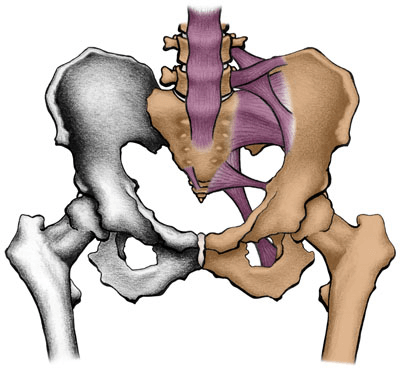
Two important factors that contribute to back and hip pain are biomechanical and soft tissue dysfunctions of the sacral joints. The sacrum is the body’s center of gravity and stability, simultaneously negotiating forces transferred from the spine and torso above and the legs below it. A complex series of ligaments attach the sacrum to the two large pelvic bones (the ilia), at the sacroiliac joints. In doing so, they help provide a stable transition between the upper and lower body. The sacrum also forms a joint with the fifth lumbar vertebra at the base of the spine — the lumbosacral junction.
The sacroiliac joints contribute significantly to lower back stability and the lumbosacral junction contributes greatly to low back mobility. Together, these joints and their support ligaments support the entire body above the pelvis. They represent significant structural and functional units when we walk, bend, lift, twist, or perform most activities of daily living.
We find a strong correlation between dysfunctions of the sacroiliac joints and the lumbosacral junction, and back and hip pain.
Treatments
Clear Passage®️ Treatment
Clear Passage®️ therapists are experts at decreasing and freeing the excess collagen fibers and adhesions that form during the body’s healing process. As we decrease the collagenous bonds that pull the structures of the sacrum, pelvis and low back out of alignment, mobility returns and pain generally decreases significantly. Freed of the glue-like adhesions, most patients find that they can move as they did years ago, before the onset of chronic pain.
Freed of the glue-like adhesions, most of our patients find that they can move as they did years ago, before the onset of their hip or back pain.
Our goal is to, first, decrease your pain and then restore your function. As pain begins to resolve, we work to restore alignment, balance and mobility to the low back, sacrum, sciatic and hip areas. As symptoms begin to subside, we realign these structures with your legs (below) and your trunk (above) to allow your body to become more balanced, symmetrical and functional.
Other Treatment Options (Surgery, Drugs)
We have found that many patients do not obtain pain resolution after traditional physical therapy or medications. Chiropractic care may help but only temporarily, as it does not address the underlying adhesions that pull bony structures out of balance. Our work can be a natural complement to expert chiropractic care.
Most physicians agree that surgery is a treatment of last resort. While surgery can address adhesions and other mechanical problems, surgery also causes more adhesions to form. We suspect that new adhesion formation is one reason that surgery does not always result in lasting relief. In fact, some people find their pain worsens after surgery.
Surgeons may insert rods, cut or replace discs or shave openings in bones, hoping to relieve back or hip pain. Spinal surgery will not give complete relief if the pain is due to tightness or adhesions in the support ligaments, or the muscles of the low back.
The cause of back or hip pain can be difficult to diagnose. Most doctors suggest trying the most conservative interventions first. This generally means therapy before drugs, drugs before surgery, and surgery as a last resort.
Testimonials
To read past patient success stories, please visit our Testimonials page.
Back and hip pain are specialties for Clear Passage®️ clinicians. We have over two decades experience eliminating back and hip pain, without surgery or drugs. Our therapists decrease the adhesions or internal scars that form in our bodies throughout life, using a manual physio/physical therapy. We help clarify the mystery of chronic back and hip pain and eliminate it.
Back and hip pain that persists for more than three months is considered chronic.
Complete the online Request Consultation form to receive a free phone consultation with an expert therapist to learn more.
Causes and Frequency of Back & Hip Pain
Chronic back and hip pain can affect all aspects of a person’s life, as well as the lives of their family and friends. Back and hip pain that persists for more than three months is considered chronic.
Symptoms may include:
Prolonged morning stiffness
Concurrent sacroiliac or tailbone pain
Back or leg pain when standing walking or sitting
Chronic back or hip pain is often caused by structural or mechanical problems associated with adhesions. Adhesions are tiny glue-like bonds that form in the support structures of the pelvis, back and hip after a surgery, fall, accident or other tissue damage. They can pull the structures of the back or hip out of proper alignment.
Two important factors that contribute to back and hip pain are biomechanical and soft tissue dysfunctions of the sacral joints. The sacrum is the body’s center of gravity and stability, simultaneously negotiating forces transferred from the spine and torso above and the legs below it. A complex series of ligaments attach the sacrum to the two large pelvic bones (the ilia), at the sacroiliac joints. In doing so, they help provide a stable transition between the upper and lower body. The sacrum also forms a joint with the fifth lumbar vertebra at the base of the spine — the lumbosacral junction.
The sacroiliac joints contribute significantly to lower back stability and the lumbosacral junction contributes greatly to low back mobility. Together, these joints and their support ligaments support the entire body above the pelvis. They represent significant structural and functional units when we walk, bend, lift, twist, or perform most activities of daily living.
We find a strong correlation between dysfunctions of the sacroiliac joints and the lumbosacral junction, and back and hip pain.
Treatments
Clear Passage®️ Treatment
Clear Passage®️ therapists are experts at decreasing and freeing the excess collagen fibers and adhesions that form during the body’s healing process. As we decrease the collagenous bonds that pull the structures of the sacrum, pelvis and low back out of alignment, mobility returns and pain generally decreases significantly. Freed of the glue-like adhesions, most patients find that they can move as they did years ago, before the onset of chronic pain.
Freed of the glue-like adhesions, most of our patients find that they can move as they did years ago, before the onset of their hip or back pain.
Our goal is to, first, decrease your pain and then restore your function. As pain begins to resolve, we work to restore alignment, balance and mobility to the low back, sacrum, sciatic and hip areas. As symptoms begin to subside, we realign these structures with your legs (below) and your trunk (above) to allow your body to become more balanced, symmetrical and functional.
Other Treatment Options (Surgery, Drugs)
We have found that many patients do not obtain pain resolution after traditional physical therapy or medications. Chiropractic care may help but only temporarily, as it does not address the underlying adhesions that pull bony structures out of balance. Our work can be a natural complement to expert chiropractic care.
Most physicians agree that surgery is a treatment of last resort. While surgery can address adhesions and other mechanical problems, surgery also causes more adhesions to form. We suspect that new adhesion formation is one reason that surgery does not always result in lasting relief. In fact, some people find their pain worsens after surgery.
Surgeons may insert rods, cut or replace discs or shave openings in bones, hoping to relieve back or hip pain. Spinal surgery will not give complete relief if the pain is due to tightness or adhesions in the support ligaments, or the muscles of the low back.
The cause of back or hip pain can be difficult to diagnose. Most doctors suggest trying the most conservative interventions first. This generally means therapy before drugs, drugs before surgery, and surgery as a last resort.
Testimonials
To read past patient success stories, please visit our Testimonials page.
Clear Passage®️ strives to provide our patients with the finest hands-on therapy in the world. We team with each patient and focus 100% of our effort on each patient’s goals, in a professional but compassionate environment.